A Neighborhood Walk Without a Landmark Checklist
A neighborhood walk without a landmark checklist helps you notice local routines, choose thoughtful detours, and leave with a vivid detail instead of a list.
The common mistake on a neighborhood walk is treating every block as a corridor between famous sights. You reach the café or mural on your list, glance around, and leave without noticing what the street is for. A neighborhood walk without a landmark checklist shifts the focus from navigation to observation: look for one clue about how people use the place.
Choose a question that can travel with you, such as “Where do people pause?” or “What changes between the busy street and the next block?” Then let what you notice shape the walk. You are not trying to cover the neighborhood; you are giving your attention somewhere to land.
What question will help you notice street life?
A useful observation question is narrow enough to guide your eyes and open enough to invite surprises. “What is this neighborhood like?” is too broad to hold in mind. “Where do shopkeepers put signs, plants, or chairs?” gives you something visible to follow.
Pick a question that suits your mood and the setting. You might look for delivery carts, shop shutters opening, café tables being reset, benches in the shade, or the point where storefronts give way to homes and workshops. These are clues about daily use, not boxes to tick.
If your question stops being interesting, change it. You might begin by noticing where people wait, then become curious about what they do while they wait. The walk can change direction because you have noticed something worth following.
How can you start without planning a route?
Begin somewhere easy to reach and leave: a public square, a transit stop, or a street with open businesses. Take in the scene before choosing a direction. Notice where people are moving, where it seems comfortable to pause, and what catches your attention without effort.
Let the question guide your first turn. If you are watching for places to pause, choose a street with stoops, benches, or café fronts. If you are listening for changes in sound, walk away from a busy road and notice whether buildings or courtyards soften the noise.
Keep one simple orientation cue in mind, such as the name of your starting street or a transit station. It works like a bookmark: a way to find your place again, not an instruction to follow a fixed sequence. This walk is about reading the street’s details, not practicing a route through a grid.
What can a single block reveal?
Walk at a pace that leaves room to notice details, without stopping at every doorway. Look at the ground as well as the façades: patched paving, worn paths, and the shape of a curb can hint at how people move through a street. Then look up at balconies, awnings, signs, and upper-floor windows for clues about what happens beyond the sidewalk.
Notice transitions from one block to the next. A corner shop may give way to a school entrance; a busy avenue may quiet down behind a row of trees. These shifts reveal how a neighborhood changes in use and feel, rather than simply offering another building to photograph.
Observe shared spaces without turning residents into scenery. Avoid close-up photos of people without permission, looking into private courtyards, or blocking doorways while you take notes.
What if an unexpected detail changes your walk?
Follow a detour when it connects to your question and feels comfortable. A covered passage, pocket garden, or cluster of repair shops may offer a fresh clue about the area’s daily rhythm. If similar side streets make it hard to remember where you turned, note a public street name or transit stop before wandering farther.
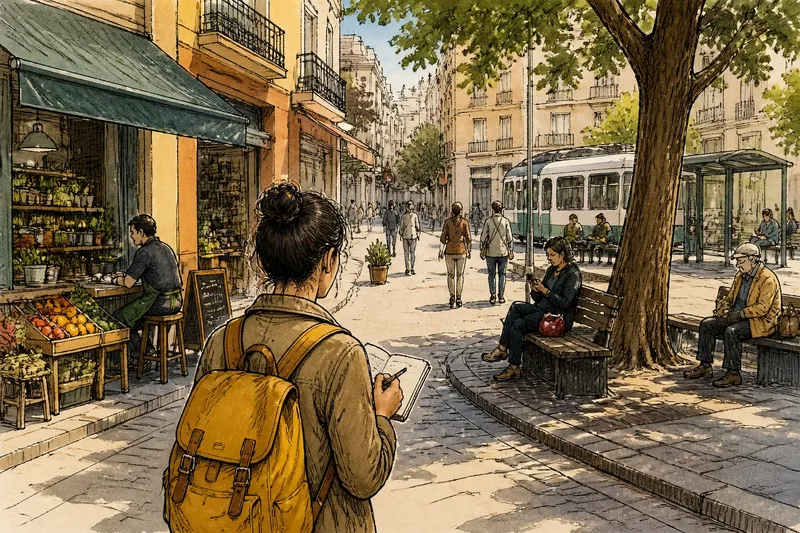
Say you start near a tram stop with a fictional question: where do people pause between errands? You notice stools outside a grocery, then a shaded bench beside a small plaza. You sit nearby and see people wait, talk, and sort their bags; the resulting answer is that both spots serve as informal pauses, though one is tied to a shop and the other to shared outdoor space.
If an alley appears private, the street feels uncomfortable, or the weather turns unpleasant, skip the detour. Choose a more public street, step into an open café, or head back toward your starting point. Curiosity should not require ignoring your comfort.
How can you stay observant without making a checklist?
Use these choices to keep the walk centered on attention rather than collecting sights. Each item links an observable cue to a decision, with another option if the cue points elsewhere.
- Check your question: If you can name one visible clue it asks you to notice, follow that clue; if you cannot, narrow the question to something observable, such as where people sit.
- Check your attention: If a detail genuinely answers your question, pause or make a brief note; if you are looking only to collect another example, put the notes away and continue without recording it.
- Check your surroundings: If a street feels public and comfortable, continue observing; if it feels private or uncomfortable, choose a busier street or return toward your starting point.
- Check the direction of a detour: If it connects to your question and remains easy to leave, follow it; if it leads into a closed passage or an uncertain area, stay on the public street instead.
- Check your orientation cue: If you can still identify your starting street or transit stop, keep exploring; if not, consult a map or ask at an open business before continuing.
- Check your energy: If you still have the attention to notice details, continue at an easy pace; if you feel tired or distracted, head toward a familiar stop or sit somewhere public.
Imagine you are near a market with a fictional question about where people pause. You notice a line beside a bakery, a bench by a bus stop, and a quiet entrance that might lead into a private courtyard. You decide the bakery line and bus-stop bench are relevant public spaces, skip the uncertain entrance, and write down that pauses seem connected to errands or transport; if you lose your sense of direction, you check the map for the market street before going on. The tradeoff is clear: you leave one curiosity unanswered in exchange for a more comfortable, legible walk.
What should you remember after the walk?
Record one detail and one question it left you with. “People waited beside the bakery even when the square was quiet” is more useful than a list of streets passed: it gives you a specific memory without pretending to explain the whole neighborhood.
A neighborhood walk without a landmark checklist can leave you with a sharper sense of one corner’s ordinary routines. Keep that observation in mind on another street, but let new details replace it when they catch your eye.