Why a Transfer Belongs in Your Route Plan
Plan city transfers with the full walk, wait, and platform change in view, so you can choose a route you can follow and adapt when service changes.
The common mistake in a city route plan is comparing trips by ride time alone. A transfer may look like a small interruption on a map, but it adds a walk, a wait, and a fresh decision about where to go; leave those out and your arrival plan can unravel before you reach the platform.
Think of a transfer as a door you have to find inside a busy building: the passage may be short, but knowing which way to turn matters. Compare the whole journey, including where you will wait, how you will identify the next service, and what you can do if it changes.
What does a transfer add to a route?
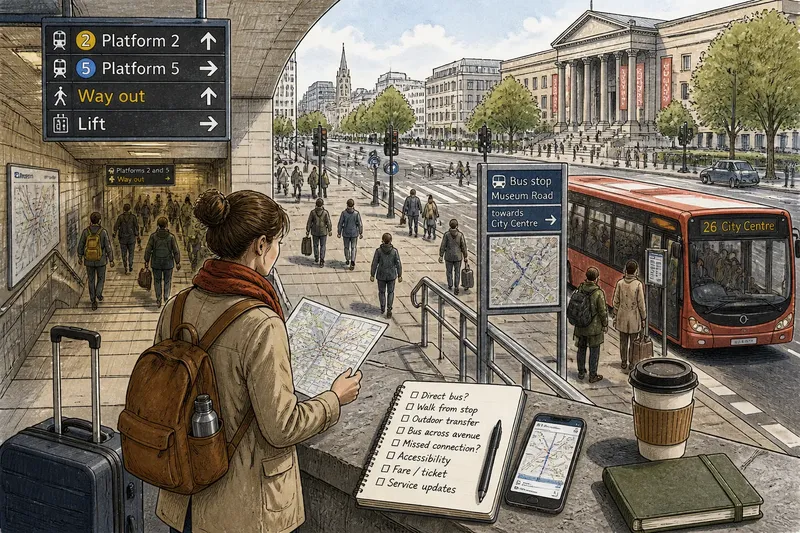
A transfer is more than stepping off one vehicle and onto another. You may need to reach a different platform, follow signs through a station, cross a street to a bus stop, or check that you are boarding in the right direction. A route map can show the connection without making the path between services obvious.
In a familiar station, finding the next platform may feel routine. In a large interchange, an underground passage or a stop on the other side of a wide avenue can demand more attention. Luggage, mobility needs, or traveling with a child can also make the physical connection a major part of the trip.
Each transfer creates a decision point: confirm the line, direction, platform, departure, or service notice. The more unfamiliar the connection, the more useful it is to know in advance what sign or stop name you are looking for.
How do you compare a direct route with a transfer?
Start at the door you will leave and finish at the entrance you need. Compare the direct option with alternatives in a transit app or the operator’s journey planner, then trace each connection on a station diagram or street map. A route’s shape and transfer locations tell you more than its headline ride time.
- Direct route: If the bus uses a congested street or stops far from your destination, then compare the remaining walk with a route that changes services; if the walk is manageable and the connection is complicated, choose the direct bus.
- Transfer location: If the second platform is linked inside the station, then note its signs and direction; if you must exit or cross a street, map that path and consider a route that avoids it.
- Direction: If the platform or stop clearly identifies the correct direction, then record its destination name; if matching stops could send you the wrong way, verify the vehicle display before boarding.
- Missed connection: If another suitable service follows, then keep that option in your plan; if a missed departure would disrupt your arrival, choose a route with a simpler fallback.
- Accessibility: If the operator lists a step-free route and working access for your connection, then check the details for each leg; if not, seek an accessible alternative or current guidance from the operator.
- Fare and system change: If the change stays within one fare system, then follow its transfer instructions; if it crosses operators or fare gates, check ticket rules and whether you must exit the station.
Say you are going from a hotel to a museum before a timed entry. Imagine the route planner offers a direct bus that stops a few blocks away and a train followed by a bus that stops closer; the station map shows that the bus stop is outside, across a busy avenue. You compare the walk from the direct bus stop with the outdoor transfer, then choose the direct bus because its remaining walk is easier to follow; the observable result is one boarding and a clear walk to the museum, while the tradeoff is arriving farther from its entrance.
What should you verify before boarding?
Treat the connection as a small journey of its own. Identify where you leave the first service, how you reach the next one, and which sign or stop name you will follow. A station diagram, street map, and official transit app answer different questions, so save the relevant details rather than trying to reconstruct them in a crowded concourse.
Pay attention to transfers between systems or separate locations. A subway-to-bus change may require leaving fare gates or using a different ticket; a rail station and nearby bus terminal can have similar names but separate entrances. Check the operator’s instructions for fares, accessibility, and service changes, which vary by system.
Confirm the direction of travel, too. A bus stop with the same name may sit across the road, and platforms may serve opposite directions on different levels. Record the destination shown on the display as well as the line name or number, especially if local place names are unfamiliar.
How can you adapt when a connection changes?
Check the service status for every leg before leaving. Keep an alternate route that uses a different line or a walkable link, and know where to find updates if your phone signal drops. A disruption on the second leg can matter even when the first part of the trip is running normally.
If a change happens en route, pause somewhere clear of other passengers and confirm the next move. Check operator notices, platform displays, or staff guidance instead of following a crowd that may be headed elsewhere. Compare the new journey with the time you have and any entry conditions; if a delay could affect an appointment or timed ticket, contact the venue.
Allow room for ordinary movement, particularly if you have bags or need step-free access. A lift queue, crowded platform, or crossing to a separate stop can change what is feasible. A connection that still works when you need time to read signs is more useful than one that depends on every small action going perfectly.
Which transfer questions should you answer?
Is a direct route always the easiest?
No. It avoids a change of service but may involve slow traffic, a longer ride, or an awkward walk from the stop. Compare the whole trip and the decisions each option asks you to make.
How can you tell if a station transfer is simple?
Check a station map to see whether platforms connect inside the station or require an exit and street crossing. Follow the actual path between them rather than assuming that one station name means a continuous space.
Does frequent service make a transfer less risky?
It can make a missed departure less disruptive, but it does not remove a difficult walk or confusing change of platform. Consider the connection itself and the alternatives available if your timing shifts.
What if a transfer is inaccessible?
Check the operator’s accessibility information for each station, stop, and route, including elevator status where available. If the path does not meet your needs, look for an accessible alternative and ask the operator or a qualified local mobility service for current guidance.
When does a transfer make the trip easier?
A transfer earns its place when it makes the whole trip more workable, perhaps by avoiding slow traffic or bringing you closer to the entrance you need. It may be the wrong trade when the connection is hard to locate, inaccessible for your needs, or adds a stressful decision to an already busy day.
For your next city trip, compare the direct option with a route that changes services, then trace each connection on a map. Keep the line, direction, platform or stop, and an alternate route together in your notes. That is the useful test of a transfer: you can picture the next action before you have to take it, and still know what to do if the plan changes.